
“Every weight loss method that works — keto, paleo, vegan, GLP-1 drugs, gastric bypass — they all work because they cause you to eat fewer calories.”Too Much Food, toomuchfood.com
Methods that work reduce calories
Too Much Food’s argument is thermodynamics, not a branded diet: calories in versus calories out. The industry sells pills, plans, and injections because the tracking method costs little. GLP-1 drugs are priced on that page in the $800–$1,500 per month band; the same page says they work by making you eat less. That is literacy about a published argument. Medication decisions stay with a clinician and the FDA label for that drug.
CDC’s healthy-weight cluster frames the same work from the federal side: a lifestyle of nutrition, regular physical activity, enough sleep, and stress management. People who lose weight at a gradual, steady pace — about 1 to 2 pounds a week on that CDC page — are described as more likely to keep it off. Ranges on cdc.gov belong to CDC.
Track everything you eat
CDC step 2: track where you are. Write down or use an app to log nutrition, including everything you consume for a few days. Too Much Food names two free apps and the same rule: log the coffee creamer, the handful of nuts, the “just a bite.” That page says most people underestimate daily intake by 40–50 percent.
- Open MyFitnessPal or Cronometer. Both are the apps Too Much Food names.
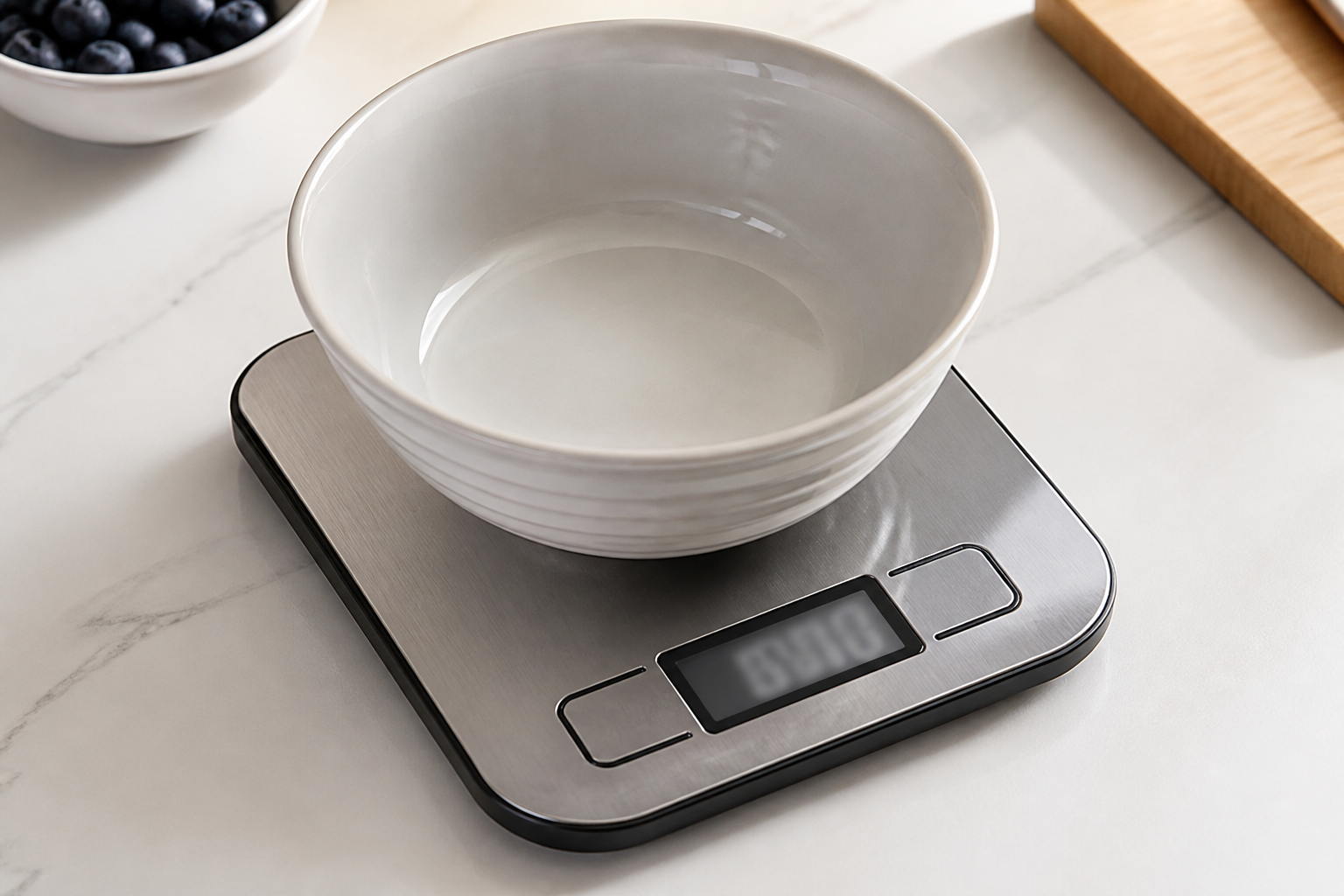
- Weigh servings on a digital kitchen scale in grams. Get this the scale search, then read the FDA serving size on the package.
- Log drinks, oils, sauces, and “healthy” blended cups. The hidden-calorie table below is why those lines matter.
- Read CDC’s food and beverage diary note on Steps for Losing Weight if you want a paper log instead of an app.
Get this a digital kitchen scale in grams.
TDEE as a concept
TDEE is an estimate of how much energy a body uses in a day — basal needs plus movement. Too Much Food describes calculating TDEE and eating a few hundred calories below it as the public method (that page names a 300–500 calorie gap and a half-pound to one-pound week). CDC describes a gradual 1 to 2 pounds a week and sends medication and condition questions to a health care provider. This lesson names both publications. It does not set a daily calorie target for you.
The calories you do not see
Figures in the table are copied from Too Much Food (“The Calories You Don’t See”). Attribute that sister site for the arithmetic. Weekly totals on that page add up past 8,000 calories when those items stack.
Protein, then minutes
Too Much Food’s third step: protein keeps you full; sugar and engineered snacks push intake up. Pair that plate with CDC adult minutes: 150 moderate a week or 75 vigorous, plus two muscle-strengthening days. Running is vigorous on the CDC adult overview. In Orlando, Track Shack publishes itself as the running and walking headquarters at 1104 N Mills Ave. Hours, events, and shoe fittings stay on that official page.
A GPS running watch and a running belt water bottle are search objects for the loop. Get this those searches. The minutes still sit on cdc.gov.